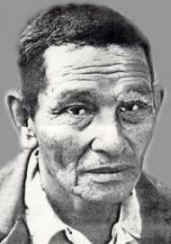
Thomas S.H Young
About
Thomas Young was one of the earliest and most significant students of James Mitose in the Kosho Ryu Kenpo (or Kenpo Jiu-Jitsu/Shorinji Kenpo) lineage in Hawaii. Early Training and Mitose Connection As a young boy, Young had initial exposure to Chuan Fa (Chinese martial arts). In 1942 (as an adult), he began formal training with Mitose, initially in private/garage sessions at Mitose's home, where Mitose taught a small group "Kenpo Jiu-Jitsu" or "Shorinji Kenpo." He earned his shodan (black belt) from Mitose in 1946 (some sources say around 1947), becoming Mitose's first black belt student (or one of the very first). He served as Mitose's assistant and took over leadership when Mitose stopped regular teaching. Official Self-Defense Club After WWII (1946), Mitose formalized the Official Self-Defense Club at the Central Y.M.C.A. in Honolulu. When Mitose left Oahu in 1953 (moving to the Big Island of Hawaii, then later mainland), Young became head instructor of the club. He affiliated it with Henry Okazaki's American Judo and Jujitsu Institute (later American Jujitsu Institute/A.J.I.), making it the "Kenpo division" (which included 3 Kenpo schools at the time). From 1953–1959, classes averaged ~25 students. During 1953–1959, Young promoted six men to shodan: Antone Krucky (or Kruchy), Steve Baldomero (or Boldamero), Paul Pung, George Nagazawa, Simeon Eli, and Woodrow McCandless (or McCandles). Many of these black belts were originally students Mitose left behind when he departed. Later Legacy and Succession In 1962, Young retired from heading the club and passed it to Simeon Eli. The club continued under Eli, then to Professor Charles Lee (contact: cleeaji@msn.com), who is the current inheritor as of the posts. Young remained involved in preserving Mitose's teachings later in life (e.g., collaborating with Bruce Juchnik in the Sei Kosho Shorei Kai International until his death). Additional Notes from the Posts Unlike prominent figures like William K.S. Chow, Adriano Emperado, or Ed Parker, Young was not widely known as a "great" teacher or practitioner—he was primarily recognized as Mitose's first black belt and for maintaining the original club. Little personal info is available (e.g., birth/death dates, family details); the interviewer suggests checking Honolulu Advertiser archives for an obituary or contacting old-timers/Professor Lee for more. Death date: From related historical sources (e.g., SKSKI timelines), Thomas S.H. Young died in April 1995 (after collaborating on Mitose's legacy from 1982 onward). Overall, Young played a key "bridge" role in early Hawaiian Kenpo history—directly inheriting and sustaining Mitose's original school and teachings when others branched out into new systems. The info highlights his low-profile but foundational position in the lineage.
Details
Photos
Lineage Trees (2)
Trained In
Instructors